top of page
  • csn793
  • Dec 1, 2020
  • 2 min read

I don’t think it’s difficult for franchisors and franchisees to agree on growth as a long-term goal for any brand. Growth drives consumer awareness and engagement with the brand, provides increased marketing funds (thereby doubling down on consumer awareness and engagement), and ultimately delivers incremental revenue streams for both parties.

But all growth shouldn’t be considered equal and no growth should be rushed focusing on short-term goals. Growth of poorly built or operated units that damage consumer perception can reflect negatively on the entire system. Growth that’s not economically viable for the franchisees may increase your unit count in the short term but negatively impact the health of your franchisees and destroy long-term growth plans. If franchisees struggle financially with a new build, they will soon lose their ability and/or willingness to run, maintain and remodel their current units.


There’s an extremely important principle that can get lost in the drive for accelerated growth… it’s crucial to keep the franchisee’s return on investment as the cornerstone for all growth plans and expectations. As the franchisor, there is no doubt at some point you’ll want to ask your franchisees to invest more capital towards new equipment, remodels or new units. What we need to remember though is that there is a plethora of opportunities available in which they can invest their capital. To drive the growth of any brand, franchisees need to be financially satisfied with the investments they’ve already made. This is not to suggest every individual investment required of your franchisees should provide immediate high returns (every brand is reliant on continued development and maintenance of the current units for their long-term success), however, the size of the investment necessary to build new units will always require stronger returns.


There’s obviously no guarantee with any new build and as a franchisor you absolutely can’t guarantee success, but you can arm the franchisees with all the information and resources you have available. You can share with them your experiences and those of other franchisees and you can establish a build-out and operational platform focused on their economic returns (as well as the brand image and experience). Most importantly, based on everything you know, you can make sure your ask of your franchisees is something you’d be willing to do yourself and that you truly believe will be financially successful. Similarly, you can make them aware of any concerns you have about something they’re driven to do themselves. The communication needs to flow both ways and both encourage and discourage investments based on a full review of the opportunity.


If your franchisees are incredibly successful which is reflected in their lifestyles, this is to be celebrated and not resented; nor should it create a filter for future conversations or expectations. You have achieved your goal and the franchisee has achieved theirs. This is something to be built upon. Economically viable growth is a virtuous cycle - your franchisees will want to grow more, investors and banks will support the growth, and it’ll be easier to recruit new franchisees should you want to. A positive financial relationship for both franchisor and franchisee is essential for sustained long term growth.


 
  • csn793
  • Nov 27, 2020
  • 2 min read

Updated: Feb 21, 2022

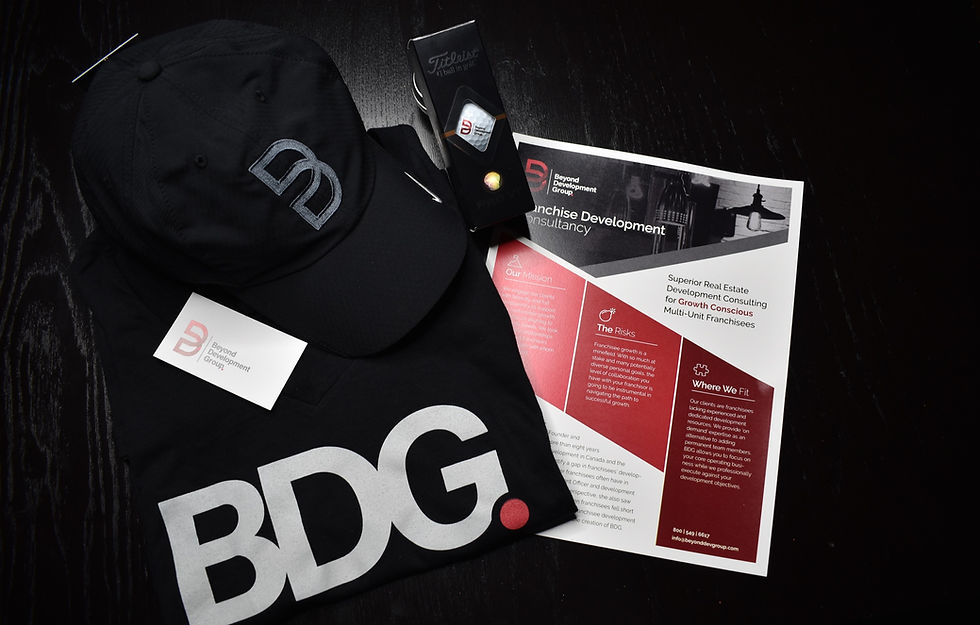
Let me take a step back and introduce myself to those who don’t know me. My name is Clare Nishikawa, the owner and CEO of Beyond Development Group (or BDG as we’ve affectionately started calling ourselves). As I started my career in real estate development with Pizza Hut, I recognized I really was quite unusual. Outside of the obvious difference in gender, my background was more unique. Most development experts I crossed paths with had built their career growing solely within the real estate world. While initially I found it incredibly intimidating to not know their language and techniques, I quickly realized I brought other strengths and I’d have the opportunity to learn the more technical aspects of the role over time. Having spent 14 years with Nielsen (the market research guru), in both global and local roles, my client management and analytical skills have set me apart in the development world.


As a Nielsen client management lead with organizations such as Kraft and BAT, my role was to understand their goals and challenges as quickly as possible. By understanding the data and services we had available, I was able to provide insights to drive my clients’ actions, whether that be new product launches, distribution expansions, pricing changes or media focuses. My role was to ensure the investments clients made with Nielsen truly provided a return on investment. A key element to achieving this was to guide the analytics of the data being purchased. Through this I gained an incredible appreciation for the power of data-based decisions. As a development lead, my passion has been to ensure I fully understand my franchisees’ goals, opportunities and limitations, provide data to guide, support or challenge their plans and to focus on their return on investment.


I’m not talking to the relationship aspects enough though. I have an insatiable curiosity and I love people. Some may say I have a tendency towards interrogation, but I truly just want to know more and more and more. I enjoy nothing greater than getting to know someone new on a one-on-one basis. This is where you’ll find me in my element. When I come across someone else that loves data or development or both as much as I do, I could spend many hours talking to them (much to their chagrin). If I can then help create something - a strategy, a plan, or a new restaurant - I’m a pig in mud.


Although I’m always happy to connect personally, now you know me a little better, over the next few weeks I’m going to share the observations I’ve made and my learnings specific to franchisee and franchisor relationships as a way to hopefully help those of you involved in franchise growth. I guess you could call this my Jerry McGuire moment, a white-paper I wrote last summer which I built my business upon.


  • csn793
  • Nov 22, 2020
  • 1 min read

Updated: Feb 21, 2022

I’m not sure many would have recommended 2020 as the year to start your own business. After months and months of preparation my foot was already hovering over the edge as we came into March. No matter how prepared you are, the fear is real. With the impact of COVID the obvious question came up, do I take a step back or forge ahead? As tempting as slowing down may have been, in many ways it would have been harder not to make the leap. Sitting here today, I can honestly say the leap has been truly exhilarating and Beyond Development Group is absolutely up and running.


bottom of page